Rashmi Khurana
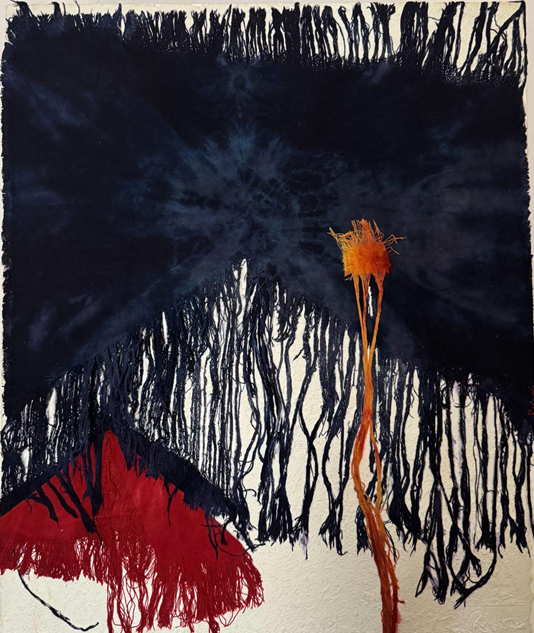
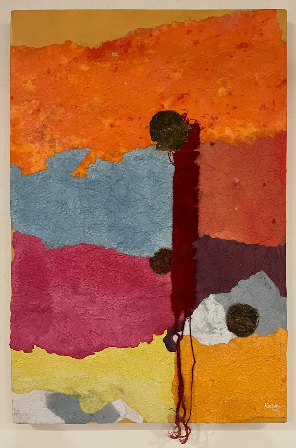
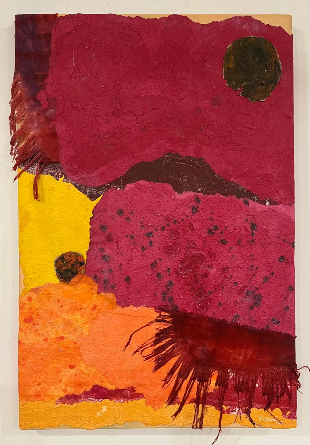
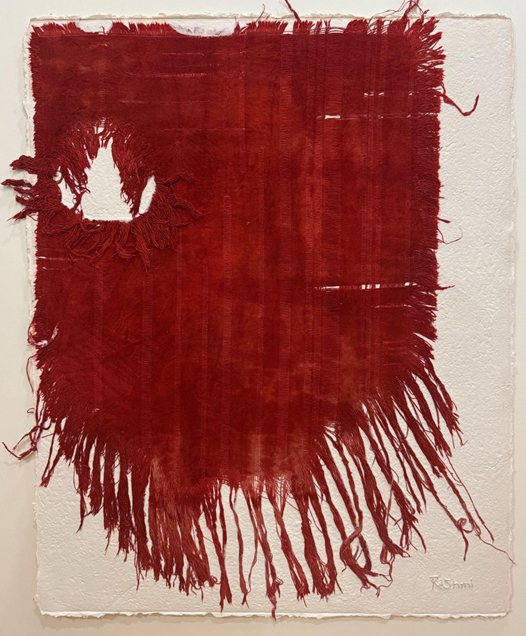
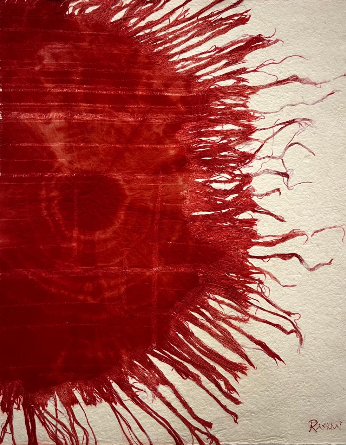
In an era dominated by acceleration and digital precision, Rashmi Khurana’s abstract practice reclaims slowness as both method and philosophy. Working with paper pulp, fabric, and thread, she approaches material not merely as medium, but as a living archive. Her surfaces are not constructed to depict; they are built to accumulate. Layers of pulp are spread by hand, fibers are embedded and displaced, threads are stitched in repetitive rhythms — each gesture marking the passage of time rather than the completion of form.
Khurana’s abstractions operate within the space of residue. Texture becomes language. Fragility coexists with resilience as delicate pulp hardens into sculptural skin and soft fabric bears the insistence of needlework. The works resist polish and finality; imperfections remain visible, functioning as evidence of touch, labor, and duration. In this refusal of seamlessness, the artist subtly challenges contemporary ideals of speed and surface perfection.
Memory in her practice is neither illustrated nor narrated. Instead, it is embedded. The tactile quality of her materials evokes domestic histories, inherited gestures, and the intimacy of handmade processes. Repetition — whether through the throwing of pulp or the persistence of stitch — becomes a temporal device, echoing cycles of remembering and forgetting. What emerges is not an image to decode, but a field to experience.
Her abstract language exists in a state of becoming. Forms appear and dissolve. Surfaces seem simultaneously excavated and constructed. The viewer encounters not representation, but sediment — traces of actions layered over time. In this way, Khurana’s work proposes abstraction as a site of quiet resistance, where slowness, materiality, and memory assert their relevance within an increasingly immaterial world.