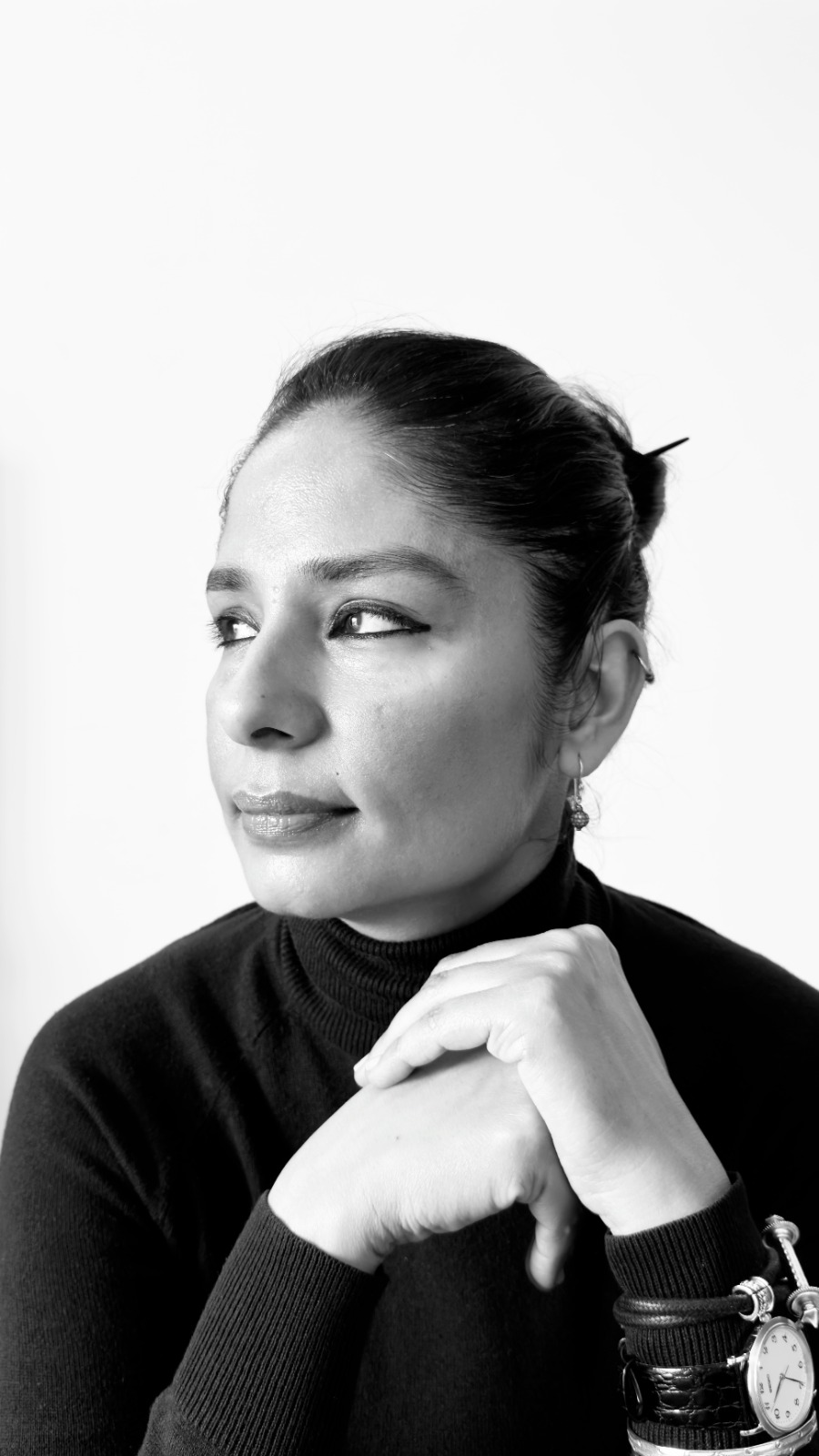
Swati Kalsi
Swati Kalsi is a designer, textile artist, and cultural thinker working at the intersection of craft, contemporary art, and material research.
With over two decades of engagement with India’s handcrafted textile traditions, she repositions embroidery, weaving, and surface as
sites of inquiry- where memory, labour, ecology, and form converge.
Rooted in sustained collaborations with artisan communities across India, Kalsi approaches craft not as preservation, but as a living,
evolving language. She attempts to nurture the artist within each artisan through immersive workshops, sustained training, upskilling, and
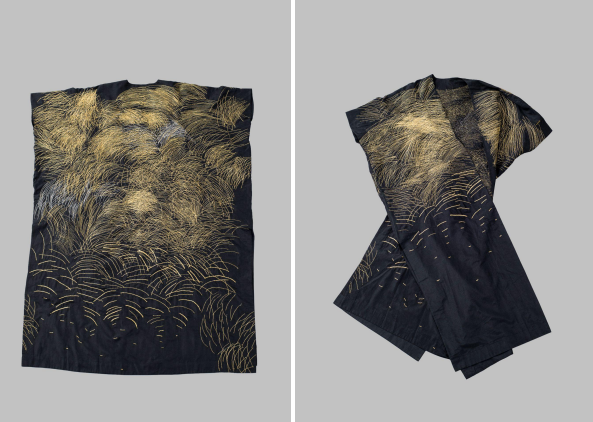
co-creation- cultivating individuality and creative agency within the act of making. Her works move between garment, textile object, and
installation, dissolving the boundary between utility and art. Thread becomes both medium and metaphor- holding narratives of resilience,
intimacy, and time.
Women’s empowerment in her practice is not proclaimed but cultivated- embedded in process, shaped through rigour, and realized
through depth of creation. Innovation emerges through considered refinement, reimagining tradition with contemporary sensibility.
She has led and conceptualized pivotal textile projects including SHE’LL, a commission by the Devi Art Foundation; Interface and
Portraiture in Embroidery with the Delhi Crafts Council’s Chamba Rumal initiative; and has presented her work at platforms such as the
India Art Fair, the Devi Art Foundation, and the Victoria and Albert Museum. In 2024, her research exploring symbiotic digital ecosystems
for artisans was presented at the State of Fashion Biennale (The Netherlands) under Ties That Bind.
Kalsi’s practice is both aesthetic and systemic- balancing material innovation with questions of value and cultural continuity. Her textile
works are collected internationally and recognized for their quiet complexity, layered intricacy, and cultural integrity.
Positioned between atelier and field, studio and cluster, Swati Kalsi continues to expand the vocabulary of textile as contemporary artwhere craft is not ancillary to culture, but central to it.