Before stories lived on pages, they lived on walls. Before screens, there were painted scrolls, their images unfolding and coming alive as stories were sung, recited and performed.
Kahani means story. But a kahani as a painted narrative is never simply a story. It belongs to a community: to what its people hold sacred, what they have survived, and what they owe to the land and to one another.
Across the deserts, forests and river plains of India, stories have long been sung, chanted, performed and painted. Narrative arts abound : the epic of Pabuji in phad...
Before stories lived on pages, they lived on walls. Before screens, there were painted scrolls, their images unfolding and coming alive as stories were sung, recited and performed.
Kahani means story. But a kahani as a painted narrative is never simply a story. It belongs to a community: to what its people hold sacred, what they have survived, and what they owe to the land and to one another.
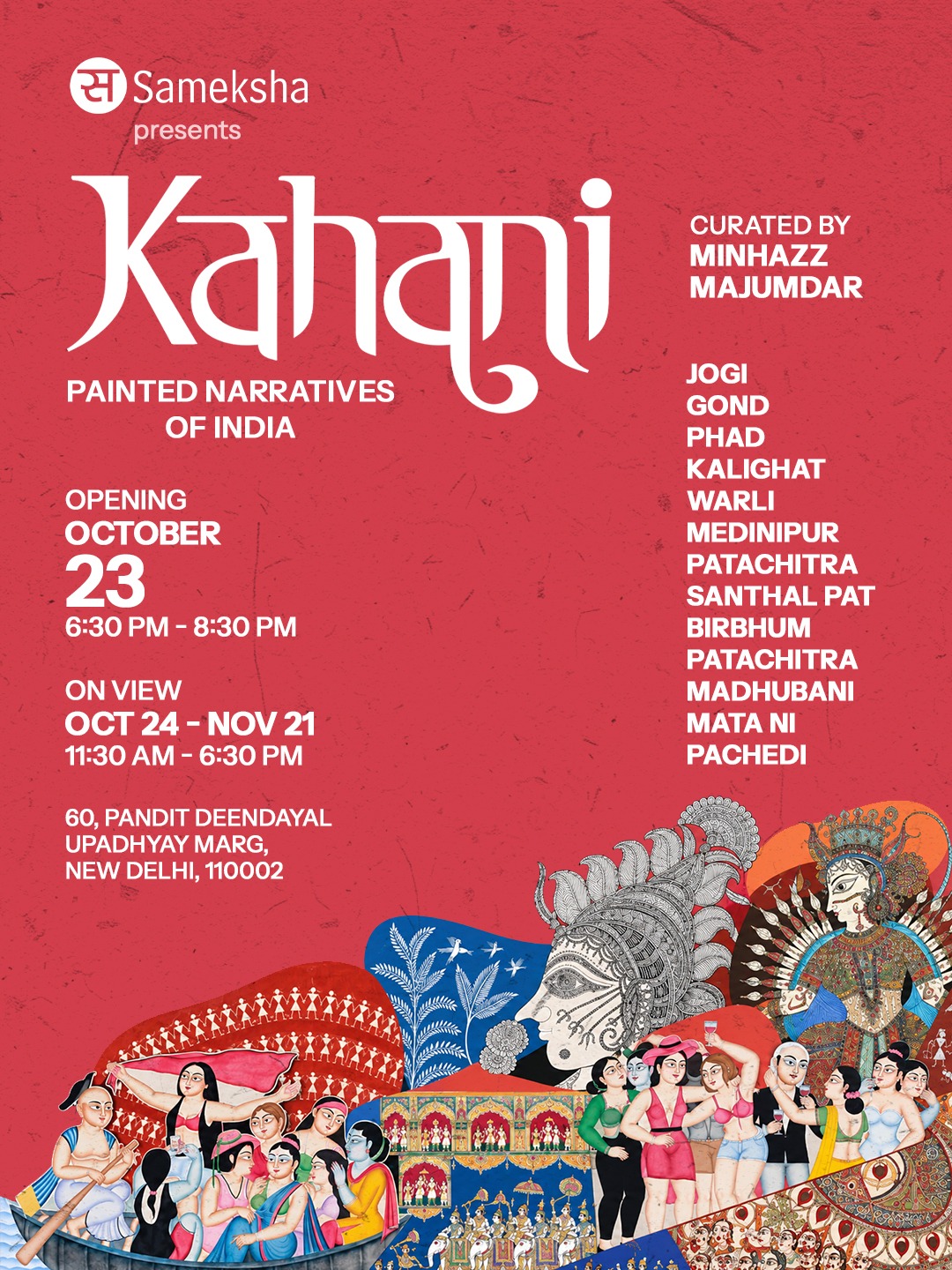
Across the deserts, forests and river plains of India, stories have long been sung, chanted, performed and painted. Narrative arts abound : the epic of Pabuji in phad paintings; the songs of the patua that accompany pattachitra scrolls; the Mother Goddess represented in the painted cloths of Mata-ni-Pachedi artists. Gond paintings draw on forests, ancestors and the living world. Warli art depicts harvest, marriage and the rhythms of village life. Mithila paintings bring together wedding rituals, divine beings, nature and scenes from everyday life. But stories do not remain unchanged. As communities and circumstances change, artists find new subjects to depict within familiar traditions. Contemporary works speak of deforestation, women’s issues, environmental loss, the COVID-19 pandemic, tsunami and other experiences of our time. In doing so, they keep these traditions relevant—not by preserving them unchanged, but by allowing them to respond to the world in which we live.
These paintings are far more than decoration. They carry memory and cultural knowledge. In thirty years of researching and curating these traditions, I have found them to be repositories of history, belief and ritual, transmitted through practice and making. From wall and shrine to paper and canvas, they have travelled through changing times and hands, adapting to new contexts without losing their distinctive identities.
Every painting here is a Kahani: rooted in place, shaped by belief and experience, and open to the stories of its time.
Minhazz Majumdar